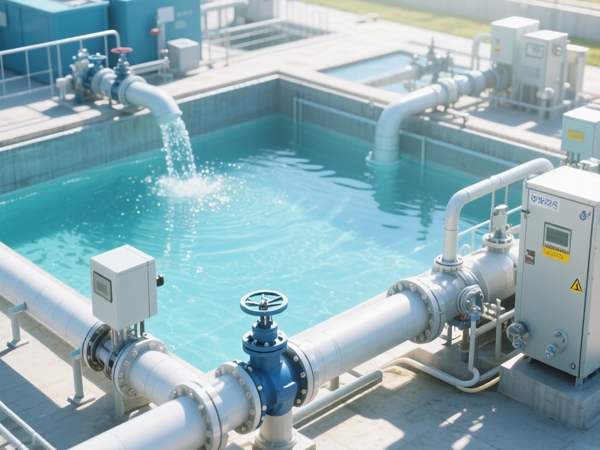
What is a Reclaimed Water Reuse System?
A reclaimed water reuse system refers to a set of facilities and processes that collect, treat, and distribute wastewater (such as domestic sewage, industrial wastewater after preliminary treatment, and urban rainwater) to meet specific water quality standards for reuse in various fields. The treated reclaimed water is not intended for drinking but can be widely used in scenarios like agricultural irrigation, urban greening, industrial cooling, toilet flushing, and landscape water supplementation.
Treatment Processes of Reclaimed Water Reuse Systems
The treatment process of a reclaimed water reuse system is designed based on the source of the wastewater and the intended reuse purpose, ensuring that the treated water meets the corresponding water quality standards. Generally, it consists of the following key stages:
Primary Treatment
This stage mainly removes large suspended solids, floating objects, and grit from the wastewater, similar to the pretreatment stage in a general sewage treatment system. Equipment such as grilles and grit chambers are used to prevent damage to subsequent treatment equipment and reduce the load of follow-up processes. It lays a solid foundation for the subsequent advanced treatment.
Secondary Treatment
Secondary treatment focuses on removing organic matter, nitrogen, and phosphorus from the wastewater. Biological treatment methods are commonly employed here. For example, the activated sludge process and biofilm process are widely used. In the activated sludge process, microorganisms in the aeration tank decompose organic matter in the wastewater into harmless substances like carbon dioxide and water under aerobic conditions. For wastewater with high nitrogen and phosphorus content, processes such as A/O (Anoxic-Oxic) and A²/O (Anaerobic-Anoxic-Oxic) are adopted to achieve efficient 脱氮除磷 (nitrogen and phosphorus removal), ensuring that the effluent meets the basic requirements for further treatment.
Advanced Treatment
Advanced treatment is the key to ensuring the quality of reclaimed water. It further removes residual pollutants in the wastewater after secondary treatment, including suspended solids, colloids, refractory organic matter, heavy metals, and pathogens. Common advanced treatment technologies include:
Filtration: Sand filtration, multi-media filtration, and microfiltration are used to remove fine particles and suspended solids. Sand filtration, for instance, utilizes the porous structure of quartz sand to trap impurities in the water.
Adsorption: Activated carbon adsorption is effective in removing organic matter, color, and odor from the water. The porous structure of activated carbon provides a large specific surface area, enabling strong adsorption of pollutants.
Membrane Separation: Technologies such as ultrafiltration (UF), nanofiltration (NF), and reverse osmosis (RO) are highly efficient in removing dissolved salts, microorganisms, and small molecule organic matter. Ultrafiltration can 截留 (retain) macromolecular substances and colloids, while reverse osmosis can even remove most ions, producing high-quality reclaimed water.
Disinfection: To ensure the safety of reclaimed water, disinfection is essential. Methods such as chlorination, ultraviolet (UV) disinfection, and ozone disinfection are commonly used to kill pathogenic bacteria, viruses, and other microorganisms in the water.
Application Scenarios of Reclaimed Water
Reclaimed water, with its stable water quality and relatively low cost, has a wide range of application scenarios:
Agricultural Irrigation: Reclaimed water can be used for irrigating crops, vegetables, and fruit trees. However, it is necessary to ensure that the water quality meets the agricultural irrigation standards to avoid adverse effects on soil and crops. For example, in areas with water shortages, using reclaimed water for irrigation of grain crops has achieved good results, reducing the use of groundwater.
Urban Greening and Landscape: It is an ideal water source for watering lawns, parks, and street trees, as well as for supplementing landscape water bodies such as lakes and fountains. This not only saves freshwater resources but also reduces the cost of urban greening maintenance.
Industrial Reuse: Reclaimed water can be used as cooling water in power plants, steel mills, and other industries, as well as for process water in industries with lower water quality requirements, such as textile printing and dyeing and paper making. This helps enterprises reduce water costs and meet environmental protection requirements.
Advantages of Reclaimed Water Reuse Systems
Water Conservation: By reusing treated wastewater, reclaimed water reuse systems reduce the extraction of freshwater from rivers, lakes, and groundwater, effectively alleviating water scarcity.
Economic Benefits: Compared with the development of new freshwater sources, the cost of reclaimed water treatment and reuse is relatively low, bringing economic benefits to both society and enterprises.
Future Trends of Reclaimed Water Reuse Systems
With the advancement of technology and the increasing awareness of water conservation, reclaimed water reuse systems will develop in the direction of higher efficiency, intelligence, and diversification. The application of advanced treatment technologies such as membrane bioreactors (MBR) will become more widespread, improving the quality and treatment efficiency of reclaimed water. Intelligent monitoring and management systems will be adopted to realize real-time monitoring and optimal operation of the treatment process, reducing energy consumption and operating costs. In addition, the integration of reclaimed water reuse with other water management measures, such as rainwater harvesting and groundwater recharge, will form a more comprehensive water resources management system.
In conclusion, reclaimed water reuse systems play an increasingly important role in addressing water resource issues. Their promotion and application are of great significance for achieving sustainable water use, protecting the environment, and promoting economic and social development.