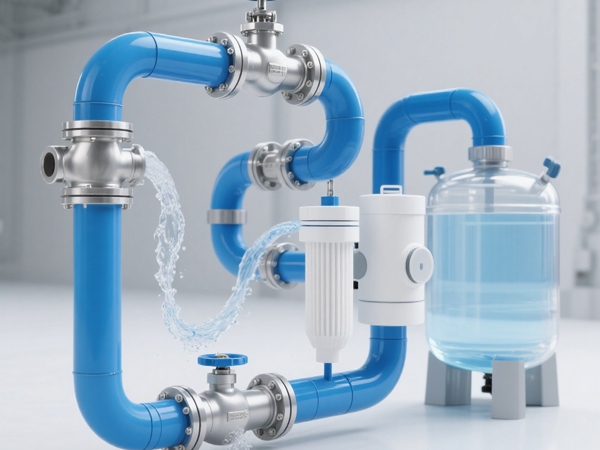
Oil containing wastewater treatment system
Release Date:2025-08-13 11:20Popularity:183
Oil-containing wastewater is a type of industrial and domestic wastewater that contains various forms of oil substances, such as floating oil, dispersed oil, emulsified oil, and dissolved oil. If directly discharged without treatment, it will cause serious pollution to water bodies, soil, and the atmosphere, endangering ecological balance and human health. Therefore, an efficient oil-containing wastewater treatment system is crucial.
Sources and Characteristics of Oil-Containing Wastewater
Oil-containing wastewater comes from a wide range of sources. In industrial production, it is mainly generated in petroleum refining, petrochemical, metal processing, food processing, and catering industries. For example, petroleum refining plants produce a large amount of wastewater containing crude oil and various petroleum products during oil extraction, distillation, and refining processes; metal processing plants generate wastewater with cutting oil and lubricating oil during machining and rolling; food processing plants and catering industry discharge wastewater containing animal and vegetable oils. In daily life, domestic sewage also contains a certain amount of oil from cooking and washing.
The characteristics of oil-containing wastewater vary depending on the source. Generally, it has the following characteristics: high oil content, which can range from a few hundred mg/L to several thousand mg/L; complex composition, often containing other pollutants such as suspended solids, organic matter, heavy metals, and surfactants; some oil-containing wastewater has high temperature and acidity or alkalinity, which increases the difficulty of treatment.
Treatment Processes of Oil-Containing Wastewater Treatment System
The treatment process of oil-containing wastewater is determined according to the properties of the oil, the content of oil and other pollutants, and the discharge standards or reuse requirements. Common treatment processes include the following stages:
Pretreatment
Pretreatment is mainly used to remove floating oil and large suspended solids in the wastewater, reducing the load of subsequent treatment processes. The main methods include:
Gravity Separation: This method utilizes the density difference between oil and water to separate floating oil. Common equipment includes oil separation tanks and API oil separators. In the oil separation tank, wastewater flows slowly, and the floating oil rises to the surface due to its lower density and is collected and removed by skimming devices. API oil separators are more efficient and are widely used in petroleum and petrochemical industries.
Filtration: 格栅 (grilles) and screens are used to remove large suspended solids and debris in the wastewater, preventing them from clogging or damaging subsequent treatment equipment.
Primary Treatment
Primary treatment focuses on removing dispersed oil and 部分 (part of) emulsified oil. Common methods include:
Coagulation and Flocculation: By adding coagulants (such as aluminum sulfate, ferric chloride) and flocculants (such as polyacrylamide), the tiny oil droplets and suspended particles in the wastewater aggregate into larger flocs, which then settle or float to achieve separation. This method is effective for emulsified oil with high stability.
Air Flotation: Air flotation equipment is used to generate a large number of tiny bubbles in the wastewater. The oil droplets and suspended solids adhere to the bubbles and rise to the surface, forming a scum layer which is then scraped off. Dissolved air flotation (DAF) is a commonly used air flotation technology, which has a good treatment effect on fine oil droplets and emulsified oil.
Advanced Treatment
Advanced treatment is used to further remove residual oil, organic matter, and other pollutants in the wastewater after primary treatment, ensuring that the effluent meets the discharge standards or reuse requirements. Common advanced treatment methods include:
Biological Treatment: Biological treatment methods such as activated sludge process, biofilm process, and membrane bioreactor (MBR) are used to degrade organic matter and residual oil in the wastewater through the metabolism of microorganisms. This method is suitable for wastewater with low oil content and high biodegradability after primary treatment.
Adsorption: Adsorbents such as activated carbon, diatomite, and zeolite are used to adsorb residual oil and organic matter in the wastewater. Activated carbon has a strong adsorption capacity and can effectively remove small molecule organic matter and odor.
Membrane Separation: Technologies such as ultrafiltration (UF) and nanofiltration (NF) can intercept oil droplets and macromolecular organic matter through the selective permeability of the membrane, achieving deep purification of wastewater. Membrane separation has the advantages of high efficiency, no secondary pollution, and easy automation.
Key Equipment of Oil-Containing Wastewater Treatment System
Oil Separation Equipment: Including oil separation tanks, API oil separators, CPI oil separators, etc. These equipment are designed according to the principle of gravity separation and are used to separate floating oil and dispersed oil.
Air Flotation Equipment: Such as dissolved air flotation machines, which consist of a pressure tank, a release device, a flotation tank, and a scum scraping device. They generate tiny bubbles to carry oil droplets and suspended solids to the surface for removal.
Coagulation and Flocculation Equipment: Including mixing tanks, flocculation tanks, and sedimentation tanks. The mixing tank is used to fully mix the wastewater with coagulants; the flocculation tank provides a suitable environment for floc growth; the sedimentation tank is used to separate the flocs from the wastewater.
Biological Treatment Equipment: Such as aeration tanks, biofilters, and MBR reactors. Aeration tanks provide oxygen for microorganisms to decompose pollutants; biofilters use the biofilm on the filter material to purify wastewater; MBR reactors combine membrane separation and biological treatment, with high treatment efficiency.
Adsorption Equipment: Such as activated carbon adsorption towers, which are filled with activated carbon. Wastewater passes through the adsorption tower, and pollutants are adsorbed by activated carbon.
Application Fields of Oil-Containing Wastewater Treatment System
Petroleum and Petrochemical Industry: This is the main source of oil-containing wastewater. The treatment system can effectively remove oil and other pollutants in the wastewater, ensuring that the effluent meets the discharge standards, and some treated wastewater can be reused for production.
Metal Processing Industry: It can treat wastewater containing cutting oil, lubricating oil, etc., reducing environmental pollution and recycling useful substances.
Food Processing and Catering Industry: It is used to treat wastewater containing animal and vegetable oils, avoiding blockage of sewer pipes and pollution of water bodies.
Shipping Industry: Ships discharge a large amount of oil-containing wastewater during navigation. The treatment system on board can reduce the pollution of oil-containing wastewater to the marine environment.
Advantages of Oil-Containing Wastewater Treatment System
Environmental Protection: It can effectively remove oil and other pollutants in the wastewater, reducing the pollution of water bodies, soil, and atmosphere, and protecting the ecological environment.
Resource Recycling: Some oil substances in the wastewater can be recycled through treatment, such as recovering petroleum products from petroleum wastewater, which has certain economic benefits.
Compliance with Standards: Ensure that the discharged wastewater meets the national and local environmental protection standards, avoiding legal risks and penalties for enterprises.
Water Reuse: The advanced treated oil-containing wastewater can be reused for production, irrigation, and other purposes, saving freshwater resources.
In summary, the oil-containing wastewater treatment system is an important environmental protection facility, which plays a vital role in controlling oil pollution, protecting water resources, and promoting sustainable development. With the continuous advancement of technology, the treatment efficiency and stability of the system will be further improved, providing more effective solutions for the treatment of oil-containing wastewater.
Recommend